
Canton Resident Lookup Records
No single Canton file confirms every fact about one person. A solid resident lookup starts with the record closest to the question at hand. The county GIS viewer can reveal a recorded owner. It can also show a parcel's site address and separate mailing fields. The Ohio voter tool can confirm a registration under a name and Stark County. Court, probate, vital, and licensing systems each carry their own scope. Treat every return as a dated lead rather than a final answer. Then chase a second, independent match from a different records office.
| Record | What it can confirm | Custodian or tool | Access boundary |
|---|---|---|---|
| Parcel and tax fields | Owner, situs, mailing field, legal description, sale facts | Stark County Real Estate Search and GIS | Owner and mailing fields do not list all occupants. |
| Recorded documents | Grantor, grantee, instrument and legal-description trail | Stark County Recorder | Archive guide covers 1809-1981; current guide begins in 1982. |
| Voter registration | Registration, listed residence, precinct and allowed history | Ohio Secretary of State Voter Lookup | Protected fields and confidential registrations are excluded. |
| Court or probate docket | Party, case, dates and public docket events | Canton Municipal Court, Stark Clerk, or Probate Court | A party listing is not proof of a current address. |
| Vital or historical source | Event, relationship, date, or place | Canton City Public Health, Probate, or Ohio History Connection | Access and certification depend on the record type. |
A common name needs a disciplined start. Use a name-and-county tool first, keep the exact spelling intact, then layer in an address, date, role, or relationship drawn from another source. Two same-name hits from one system prove nothing on their own.
Verify a Canton Resident by Sequence
The strongest Canton resident lookup is a short chain of compatible records. Start with the narrowest official source available. A known address, for instance, can lead to a parcel and its legal description. A case number, by contrast, belongs first with the court that issued it. Keep the returned role and date. Those small details let you test any later result. That way you avoid blending two people who happen to share a name.
- Use the known name with Stark County in the voter lookup, or use a complete address in the County GIS viewer. Save exact spellings, dates, and the record role.
- Compare a different record category. A parcel result can be checked against a Recorder instrument; a historical directory entry can be paired with a census, probate, newspaper, or obituary source.
- Check conflicts directly. A property mailing address is not a situs address, and a court pleading may repeat an address that was current only when it was filed.
- When a fact must be certified, request inspection or a copy from the actual custodian rather than relying on a search screen.
- Docket
- A court's chronological list of events in a case, such as a filing or judgment entry.
- Index and image
- An index points to a record. An image is the displayed document or page and may have separate remote-access limits.
- Certified copy
- A copy issued by the responsible custodian with the certification required for an official use.
Stark County's public-records policy permits a focused request with no special form and no stated purpose. Hand the custodian a case number, a name variation, a date range, an address, or a document reference already found. That beats asking an office to investigate a person.
Canton Court Lookup Choices
Pick the court by the type of matter, not the mailing city. Canton Municipal Court's online docket handles cases inside its own jurisdiction. For Common Pleas and related clerk records, the Stark County Clerk of Courts posts an online case docket on its site. The Clerk notes that computerized docket entries begin January 1, 1985. Estate, guardianship, and marriage questions go through Probate instead. Federal cases live in PACER, run by the Northern District of Ohio. The Clerk's counter sits at 115 Central Plaza North, Suite 101, Canton, open weekdays from 8:30 a.m. to 4:30 p.m.
A web docket is a convenience. It is not the full official file. Sealed, expunged, juvenile, adoption, and protected-victim material may be withheld from remote or public view, so confidential cases can simply never appear online. The Stark Clerk court-search entry shows the docket options before you settle on a route.
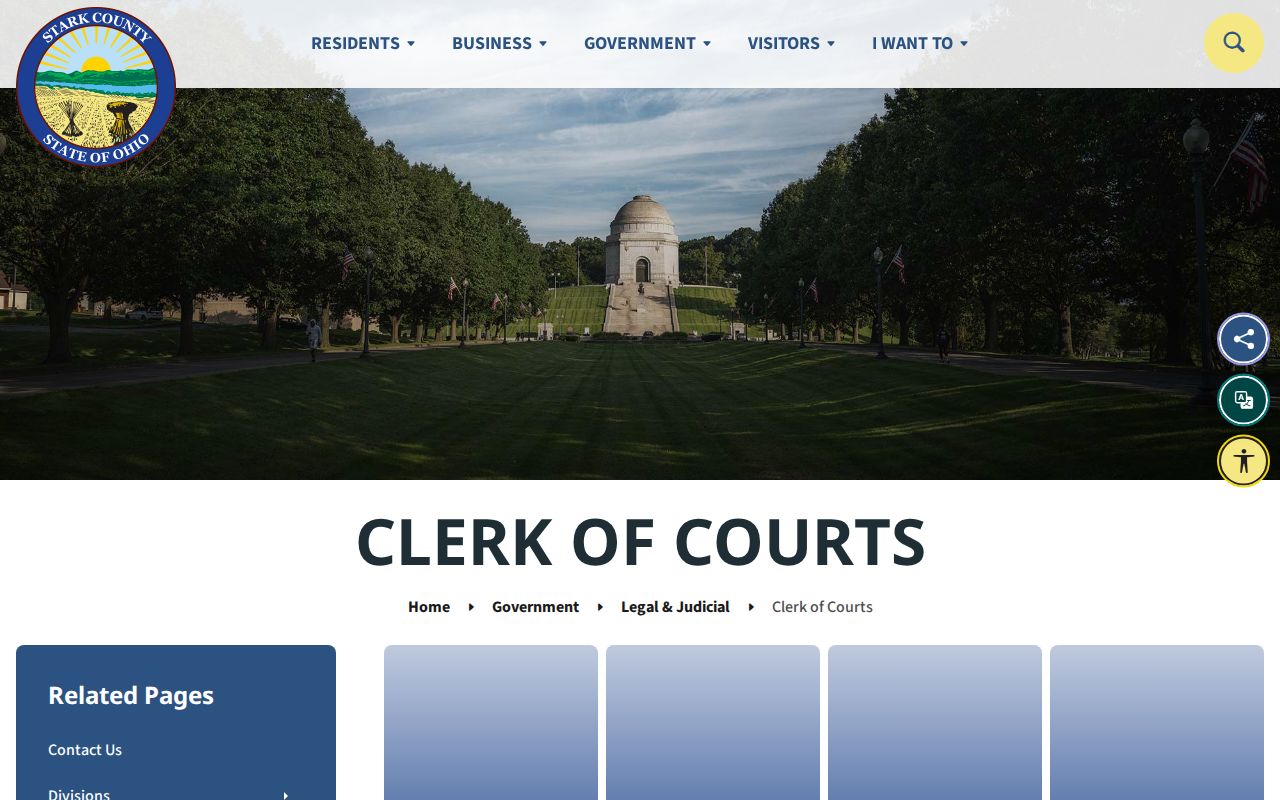
The online screen is an official starting point. A web result can be thin or old. The Clerk's counter and public-records policy remain the fallback. Result fields to preserve: the party name exactly as displayed, case number, court or division, category, filing date, docket-event date and description, public disposition, and any document or counter reference. A docket records an event. It does not establish present residence or identity by name alone.
Canton Voter Lookup Limits
The official Ohio form asks for First Name, Last Name, and County. Select Stark for anything Canton-related. A street-name step helps separate same-name results, but it is not an open street roster. Published guidance also allows a nickname, former name, or prior county when a first attempt comes up empty.
| Public detail | What it means |
|---|---|
| Name, birth date, residence and precinct | Information maintained in the public online record, subject to statutory rules. |
| Registration date and participation history | Record history, not an indication of ballot choices or present-day identity by itself. |
| Protected material | Social Security, license/ID, phone, email, confidential voter data, and protected addresses are not routine public lookup fields. |
Ohio Revised Code 3503.13 and Safe at Home protections can each limit a result. A no-result may reflect a changed name, address, or county, a matching problem, no registration, or confidential status. It never proves a person is absent from Canton.
Canton Vital and Probate Trails
For a vital event, ask first what happened and when. Canton City Public Health, Stark County Public Health, and the Ohio Department of Health each offer certificate routes for Ohio births and deaths. Ohio Revised Code 3705.23 generally requires a signed application and fee for a certified copy, with record-specific limits. The historical Ohio History Connection death index covers 1913-1944 and 1954-1970, but it serves as a research index rather than a certification portal. Marriage runs through Stark County Probate Court. A probate estate can surface a decedent, fiduciary, attorney, or relationship detail where the public file supports it. For older material, use the Court's historical records list, which points to whether the material sits at Probate, Stark Library, or the University of Akron Archives. These records verify dated facts. They offer no unrestricted path into adoption or other protected files.
Canton Resident Lookup State Sources
State portals work best after you have a name anchored to a record type. Ohio eLicense updates daily. It covers twenty-four boards and agencies. But a license hit tells you professional standing, not where someone in Canton lives. The Secretary of State business search and UCC system show filing associations. Those are not an ownership list or proof of residence. Ohio's unclaimed-funds search demands claim documentation too. A name match there confirms nothing about identity. The official Ohio eLicense verification page shows the right source for a licensing question.
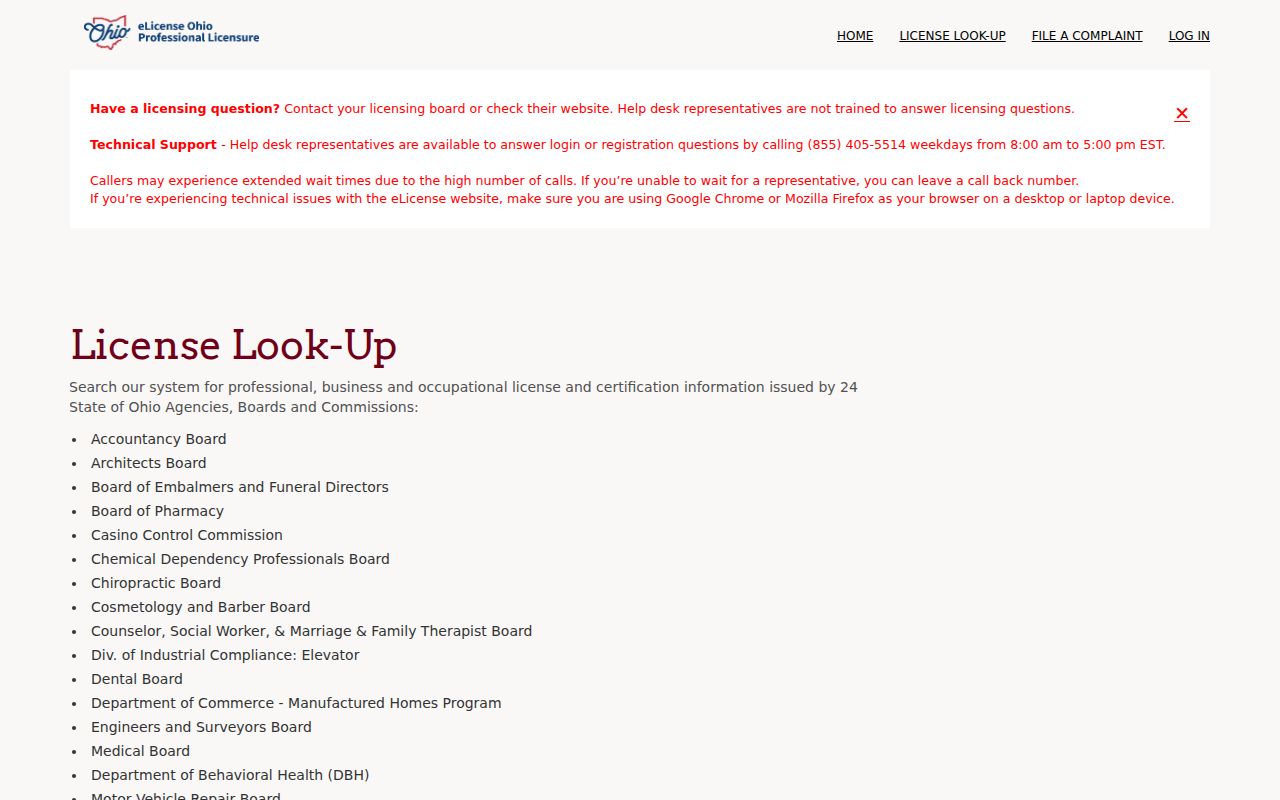
Match a license carefully. Use the exact board, the displayed license number, status, and issue or expiration details when confirming a hit with the relevant state board. The Ohio DRC Offender Search has its own limits. It covers state prison or supervision records, not a Stark County jail roster and not a current Canton address finder.
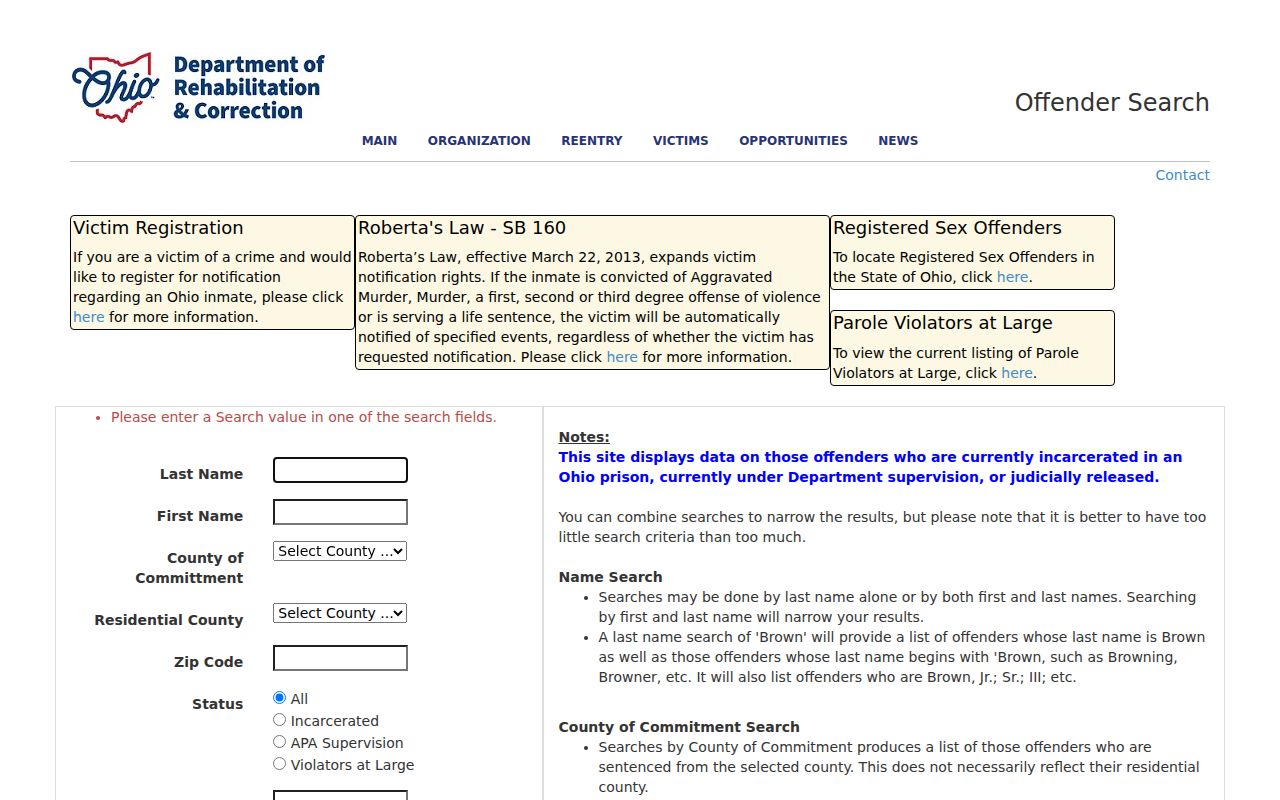
Status data can lag. Read it only within the custody or supervision scope the state source itself displays.
Canton Lookup Safety Resources
The Ohio Attorney General publishes official guidance on address-based use of the offender registry. The agency publishes no stable public query form with fixed fields. So treat this as a safety-information route. It is not a promised Canton resident lookup. Keep it separate from court records, state custody records, and local police-report requests. Review the Ohio Attorney General offender-search information for the agency's stated scope.
The official page supports a source-scope check. It is not a full Canton name or address directory, and no image here claims otherwise.
Canton Lookup Request Fallbacks
When an online index stops, go to the office that created the record. Canton accepts oral, anonymous, or written public-records requests. Its online form is a convenience, not a required first step. Ohio's Public Records Act, ORC 149.43, obliges public offices to provide existing records for inspection promptly. It also requires copies within a reasonable period. Exceptions and lawful redactions still apply.
Historic work opens other doors. Stark Library's Family & Local History department holds different material. So do the Probate custody list, the County Records Center, Ohio History Connection, and the National Archives. State what you already have. That may be a name, address, date range, collection, case, or document reference. A narrow request lets a custodian find the record and explain any limit.
Canton Resident Lookup Privacy Limits
Ohio public records have real boundaries. Medical material, confidential law-enforcement investigation records, adoption content, protected-victim information, confidential voter information, and anything else made confidential by law sit outside any general residents directory. ORC 149.45 adds an online process for redacting Social Security numbers. Safe at Home participants may use a substitute address. Eligible voters can hold confidential registration under ORC 111.44.
See an error? Contact the custodian that created the record. Commercial people-search listings can be stale or misattributed, and they never replace an official correction, redaction, or confidentiality process.